
Prepare veterinary referral records for fax where accepted. Check recipients, permission, complete documents, supplements and administrative receipt.


- Confirm the receiving practice and its current referral-record instructions.
- Check the authority and privacy requirements for sharing the records.
- Assemble the clinician-approved packet and identify outstanding documents.
- Use another accepted channel where original images or files are needed.
- Confirm document availability separately from appointment or clinical decisions.
When one veterinary practice refers an animal to another, the records exchange needs to support the receiving team’s preparation. Fax may be an agreed route for part of that packet, while images or other files need a different channel.
Prepare the records handoff around the receiving practice’s request. Administrative staff can organize documents and follow up missing items; the responsible veterinary professionals decide what clinical information is needed and how the case should proceed.
Confirm the receiving practice and permission
Verify the referral contact, current fax number and return contact through the approved process. Check whether the recipient needs the complete relevant history or a specifically requested set of documents.
Follow the rules and professional guidance applicable to the practices. As a UK example, RCVS clinical and client records guidance addresses prompt provision of relevant referral information and consent before sharing histories containing personal data, unless fully anonymized. Other jurisdictions have their own requirements.
Record the authority and disclosure checks required by your practice. Veterinary records can include personal client information; animal care does not make those details unrestricted.
Assemble the clinician-approved packet
Ask the referring clinician to identify the relevant documents, then check the set against the receiving practice’s instructions. Match the patient and client references using the practice’s approved identifiers.
Review dates and page continuity so the packet’s scope is clear. If a result or report is still outstanding, identify it as pending through the approved referral process rather than implying the packet includes it.
Keep diagnostic source files distinct from their fax copies. Ask the receiving practice how it wants original imaging or files whose detail must be preserved. A faxed report may be useful while the underlying images travel through another accepted channel.
Send the reviewed documents
Attach the approved packet in Fax.Plus and verify the destination before sending. Use the reference the receiving practice requests and a concise description of the document set.
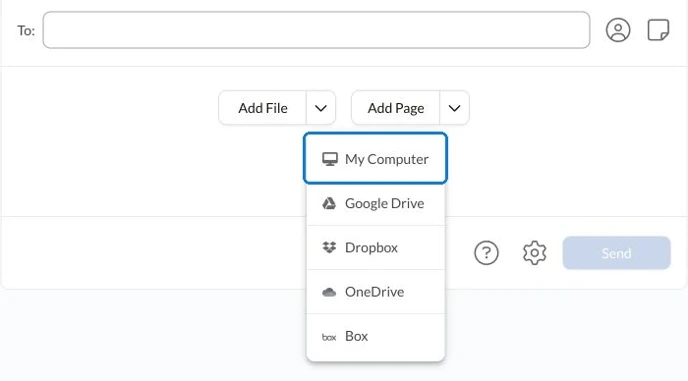
Check page order, readability and the relevant Fax.Plus document preparation steps. Put recipient-facing instructions in the transmitted cover note or document, using only the information appropriate for the exchange.
If a later report arrives, send it as a clearly identified supplement through the agreed channel. For example, “Additional report for referral [reference], supplementing records sent [date]” connects the document without presenting it as a new referral.
Confirm the receiving team can locate the records
Check the outgoing result and retain the relevant fax transmission record. Where the referral process requires a receipt check, confirm that the intended team can locate the documents and identify any missing or unreadable item.
Document availability is separate from clinical triage or appointment acceptance. Refer those questions to the veterinary team. Follow the practice’s established process for urgent communication rather than relying on fax alone.
Record outstanding documents, the responsible contact and the next follow-up action. Keep the original packet and subsequent supplements connected to the same referral so another authorized colleague can continue the handoff accurately.
FAQs
What should a practice check before faxing referral records?

Confirm the receiving practice, requested records, current destination and applicable authority and privacy requirements. Have the responsible clinician identify the relevant document set before administrative staff prepare it.
How should outstanding veterinary reports be tracked?
Identify them as pending through the approved referral process and record the responsible contact. When a report becomes available, send it as a clearly referenced supplement using the receiving practice’s accepted channel.
What should a referral-record receipt check establish?
Confirm that the intended team can locate the documents and identify missing or unreadable items. Keep that administrative check separate from clinical triage, appointment arrangements and acceptance of the referral.


Confédération Suisse
Confederazione Svizzera
Confederaziun Svizra
Schweizerische Eidgenossenschaft
Innosuisse – Schweizerische Agentur für Innovationsförderung