Resolve faxed bill-of-lading and delivery-document handoffs. Identify the shipment, requested document, replacement purpose and next review action.


- Identify the shipment and the specific document requested before sending.
- Distinguish a bill of lading from the delivery evidence the recipient needs.
- Label supplements and replacements so the receiving team can reconcile them.
- Check fax transmission separately from the shipment’s delivery status.
- Refer quantity, condition or signature questions to the responsible operations team.
A logistics desk receives a request for a shipment document by fax. The reply may need a bill of lading, a signed delivery record or a clearer copy of a particular page. The administrative task is to supply the right document against the right shipment and make the next action clear.
Name the requested document, not just “shipping paperwork.” This helps both teams distinguish a missing document from a question about what happened to the freight.
Establish the shipment and document reference
Check the shipment identifier, carrier reference and intended recipient through the organization’s approved process. Ask which document is required and what question it should answer.
If the request traces back to an order sent to a supplier, keep the fax purchase-order handoff connected to the later shipment record.
A bill of lading and signature proof of delivery can serve different purposes. FedEx’s tracking documentation identifies them as separate document types. Use the carrier’s and recipient’s actual instructions for the shipment concerned rather than assuming any shipping form is sufficient.
A bill of lading describes the shipment and associated transport record; a proof-of-delivery document records delivery information made available by the carrier. Check the exact document type the recipient requests.
Record whether the request concerns an absent document, an unreadable copy or a discrepancy requiring review. Those requests should not all produce the same response.
Select the source and complete pages
Retrieve the document from the approved shipment record or carrier channel. Check the shipment reference and date before attaching it. Include the pages the recipient requests and confirm that signatures, notations and small text are readable where relevant.
Preserve the document as received from its source. If a signature, quantity or condition note is unclear, refer the question to the responsible team rather than filling in an assumed answer or presenting a modified copy as the original.
If fax cannot preserve the detail the recipient needs, ask which accepted channel should carry that source file. Keep the fax exchange focused on documents suitable for that route.
Explain the purpose of the transmission
Use the cover sheet or transmitted note to identify the shipment reference and requested document. Follow the Fax.Plus cover-sheet preparation instructions and the recipient’s own requirements.
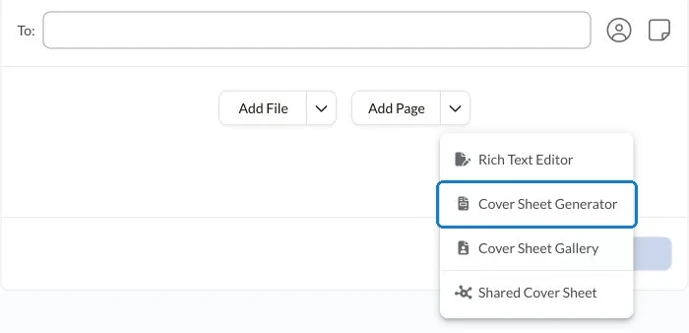
For example, “Replacement readable copy of delivery record for shipment [reference], responding to your request dated [date]” states a different purpose from supplying a document that was previously absent.
When sending only a supplemental page, identify its relationship to the earlier packet. Keep the exact outgoing document connected to the shipment record so the next operator can see what was supplied.
Resolve the handoff exception
After sending, check the shipping-document transmission record. Then use the recipient’s agreed process to establish whether it can locate and review the requested document.
A fax delivery result is not proof that the freight was delivered. Likewise, receiving a shipping document does not resolve every question about quantity, condition or a signature. Those issues belong with the responsible operations or claims team.
Record the remaining task precisely: clearer page requested, carrier document awaited or discrepancy referred for review. Keep document receipt and shipment status distinct in the approved system. Close the administrative handoff when the designated team has the requested document and the next action has been recorded.
FAQs
What should staff ask before faxing shipping paperwork?

Confirm the shipment reference, recipient and exact document requested. Establish whether the issue is a missing document, an unreadable page or a discrepancy that requires operational review.
How should a replacement shipping-document fax be identified?
Use the shipment reference, document type and purpose of the replacement. Connect it to the earlier request or transmission and retain the exact copy supplied through the approved shipment process.
What should happen when a returned delivery document contains a discrepancy?
Preserve the source document and refer the specific quantity, condition or signature question to the responsible team. Track the document handoff separately from any shipment or claim decision.


Confédération Suisse
Confederazione Svizzera
Confederaziun Svizra
Confédération suisse
Innosuisse - Agence suisse pour l'encouragement de l'innovation